


Silicone Mould
Why Choose Us
Rich Experience
After more than ten years of industry experience and technology accumulation, Xinrui Company has developed into a one-stop medical parts and finished products full ecological chain service manufacturer integrating industrial design, mold design, solid silica gel/liquid silica gel, finished product assembly, etc.
Quality and Price
Our products are of high quality and competitive price.
Production Capacity
Advanced production equipment and rich operating experience.
Customized Service
We provide customized products that can meet the strict requirements of customers.
What is Silicone Mould
A silicone mold is a flexible, rubbery container used for shaping various materials. It’s typically made of silicone, a durable and heat-resistant material. These molds come in different shapes and sizes, allowing you to create intricate designs. They’re commonly used in baking and crafting. To use one, just pour your liquid or semi-liquid mixture, like melted chocolate or soap, into the mold. Once it cools or sets, you can easily pop out the molded item. Silicone molds are great because they’re non-stick, making the release process simple. They’re reusable and easy to clean; a bit of soap and water usually does the trick. Whether you’re making chocolates, candles, or even mini cakes, silicone molds are your handy helpers, adding fun and creativity to your projects.
Benefits of Silicone Mould
Flexibility of silicone moulds
Silicone moulds come in a variety of shapes and sizes, making them versatile for any project. From cupcakes to soap, resin, and even ice cubes, the possibilities are endless.
Durability of silicone moulds
Silicone moulds are known for their durability and ability to withstand high temperatures. This makes them perfect for use in baking, candle making, and soap making. They’re also reusable and will last for years, saving you money on replacements.
Temperature Resistance
Silicone can withstand temperatures from -40 to +250 degrees Celsius, making it an ideal material for both hot and cold applications.
Non-Stick Surfaces
One of the biggest advantages of silicone moulds is their non-stick surface. Unlike traditional metal or plastic moulds, your creations will pop out easily without any sticking or tearing.This also means Silicone moulds are incredibly easy to clean. Simply rinse them with warm, soapy water or toss them in the dishwasher for a hassle-free clean up.
Types of Silicone Mould
One piece block mold
These purple molds are basic one part, one piece block molds. For the mold on the right the original (a clay witch’s hat) was anchored to the the bottom of a square box and the AM128 Pourable Silicone was poured around it. For the mold on the left (a bat), I made a custom mold box from cardboard and hot glue. Because of the bat’s unique shape, I didn’t want to waste a lot of silicone by putting the original in a square shaped container. The silicone only needs to be a half inch to an inch all around the piece.
Multi part one piece block mold
These multi-part one piece block molds are made the same way as the previous block mold. The difference is that it has two (or more) original pieces anchored in the mold box.
Two part block mold
To create these types of molds, you encase half your original part in a sulfur-free clay inside the mold box. For the mold on the right (rubber duck), you can see the vents at the tip of the duck’s bill. These vents prevent air bubbles from forming in those areas. On the mold on the left (an apple), you can see the sprue for pouring in the casting material. Both molds make use of registration or key marks to help the sides of the mold fit together tightly.
Multi part block mold
This is a four part block mold of a coffee mug. The bottom image is the mold fully assembled. This was made by encasing 3/4 of the piece in clay pouring silicone, allowing it to cure and then removing the piece from the mold box and clearing another bit of clay off, poring the next area of silicone and so on until I had a four part mold.
Application of Silicone Mould
Prototyping
Silicone molding is used in prototyping and product development production across a wide range of industries. Because the cost for silicone molds is substantially lower than hard tooling for traditional manufacturing processes like injection molding, casting in silicone molds is ideal for prototyping product designs as well as creating beta units for testing the market and consumer response to a new product. While 3D printing is better suited for creating one-off parts quickly, silicone molding and urethane casting can be ideal for smaller runs of parts.
Jewelry
Jewelers use custom silicone molds to duplicate hand-carved or 3D printed patterns in wax, allowing them to phase out the time-consuming labor of creating wax-carved patterns for each new piece, but still continue to cast from wax. This offers a major leap in serial production, making it possible for investment casting to work at scale. Because silicone molds capture a fine level of detail, jewelers can produce pieces with ornate details and intricate geometries.
Consumer Goods
Creators use silicone molds to make many custom crafts such as soaps and candles. School suppliers often use silicone molds to form items such as chalk and erasers. Toy and collectible manufacturers also use the technique to produce high-quality and accurate miniatures and custom figurines.
Food and Beverage
Food-grade silicone molds are used to form all sorts of whimsical confections, including chocolates, ice pops, and lollipops. Since silicone can handle heat up to 400° degrees Celsius, molds can be used in cooking, too. Small baked goods such as muffins and cupcakes rise nicely in silicone molds.
DIY Projects
Independent artists and DIYers often use silicone molding to craft unique creations. You can use silicone molds to form or replicate everything from bath bombs to dog treats—the possibilities are nearly endless. A fun silicone molding project for kids is to create a lifecast of their hand. Just make sure you choose a skin-safe silicone.
Size
Determine the size of the mold you need. Make sure it is large enough to contain the amount of dough you want to use and is also suitable for the size of your oven.
Shape
At Maé, we offer a wide selection of shapes, from classic to more unique forms. Choose a shape that matches the appearance and design you want for your dish or cake.
Heat resistance
Ensure that the silicone mold you choose is heat-resistant. Maé silicone molds can withstand temperatures ranging from -45°C to 280°C, allowing them to be used in both the oven and freezer.
Easy cleaning
Opt for a easy-to-clean mold. Our Maé silicone molds are dishwasher-safe or can be washed by hand.
Quality
Choose a high-quality silicone mold to ensure durability and resistance to deformation. Opting for Maé molds is a guarantee of quality! Made from premium food-grade silicone suitable for intensive and professional use, they are guaranteed food-safe.
Process of Silicone Mould
Create your product master
This is your final part design, which will be replicated in another material. When 3D printing on a stereolithography (SLA) resin 3D printer, use any Standard Resin with a layer height of 50 microns. Keep the detailed surface free of support marks. Wash the parts thoroughly with IPA—any residual tackiness on the surface can affect the silicone molding process.
Construct the mold housing
Coated MDF is a popular choice for constructing a containment box for the silicone mold, but even a simple premade plastic container will do. Look for nonporous materials and a flat bottom.
Lay out the master and apply mold release
Start by lightly misting the inside of the mold housing with mold release. Tile the masters inside the box with the detailed side up. Lightly spray these with mold release as well. This will need about 10 minutes to dry thoroughly.
Prepare the silicone
Mix the silicone rubber according to the package instructions. You can use a vibrating device like a handheld electric sander to remove air bubbles.
Pour the silicone into the mold housing
Gently pour the mixed silicone rubber into the containment box in a narrow stream. Aim for the lowest part of the box first (the base) and gradually come up the contours of your 3D printed master. Cover it with at least one centimeter of silicone. The curing process will take from one hour to one day to complete, depending on the silicone type and brand.
De-mold the silicone
When curing is complete, peel the silicone out of the containment box and remove the masters. This will serve as your ice cube tray-style mold for casting your end-use product.
Cast your part
Again, it's a good idea to lightly spray the silicone mold with mold release and let it dry for 10 minutes. Pour your end-use material (wax or concrete, for example) into the cavities, and allow to cure.
Prepare the mold for the next casting
You can use this silicone mold multiple times. Return to step seven to repeat the process.
How to Maintain Silicone Mould
Mold Release Agent
Silicone is non-stick base agent, much like the coating on a frying pan it is most effective when brand new. New mold works great for the first few uses but you will then notice that the mold becomes harder to remove or takes more time; generally speaking this is because manufactures use silicone mold release agent during the manufacturing process, this allows the item the mold is casting to be removed easily and without damaging the fresh mold. Mold release agent comes in liquid and spray form, depending on what you are molding will depend on what's right for you.
Baby Wipes & Water
This is perhaps one of the most important rules of mold care - Keep your molds clean! Leaving glitter, excess resin and other items in your mold can over time become more difficult to remove. Look after your mold and it will last longer.You can clean your mold before casting by using baby wipes or warm water. Be careful not to over stretch the mold when cleaning in small areas or you could damage it.
Layers
When using AB Epoxy Resin, depending on the product you do not want to pour more than 1/4" to 1/2" at a time depending on the products specifications. Some products are designed for pouring large quantities but not all of them and usually it is a specific type of resin.If you pour too thick you risk boiling out your cast due to the exothermic reaction that occurs when the Epoxy Resin cures and will ruin your cast, as mentioned above, the molds are designed to withstand heat but there is a limit to this.
Demolding
So you have followed the above steps and you are now ready to remove your resin cast!Some molds can have small gaps to remove a large resin piece, such as the dice molds. It is important that you not over stretch the mold when removing your pieces as this will lead to the surface of the cavity to become dull and begin to form tears that will shorten the lifespan of your mold.We are going to use the sharp edge dice mold as an example here as they can be quite tough to remove. If you have used a mold release it makes the process significantly easier and we have found after applying a moderate amount of pressure on the bottom the dice pops out without much fuss, limiting the stretching time and causing less stress on the mold.
Our Factory
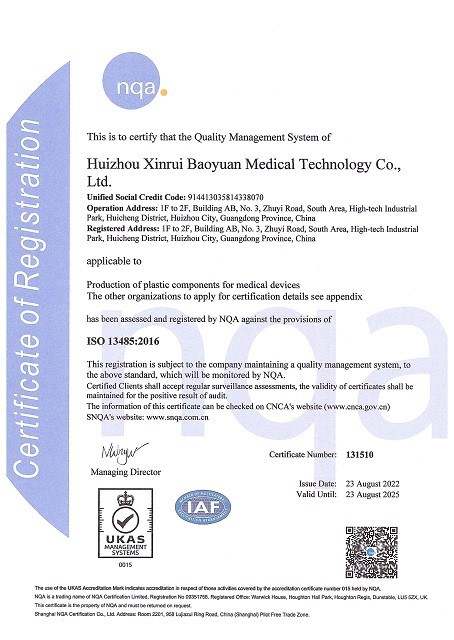
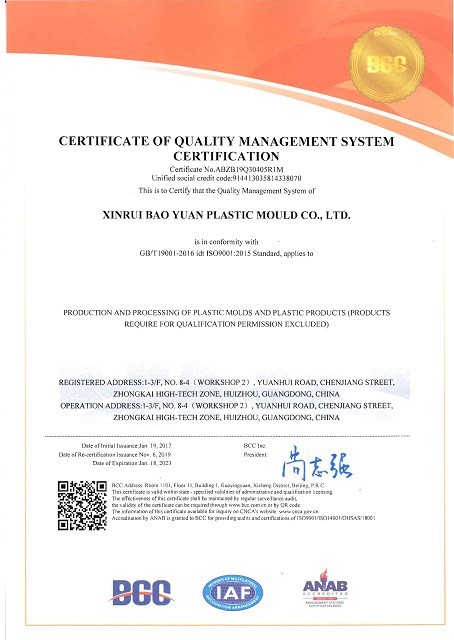
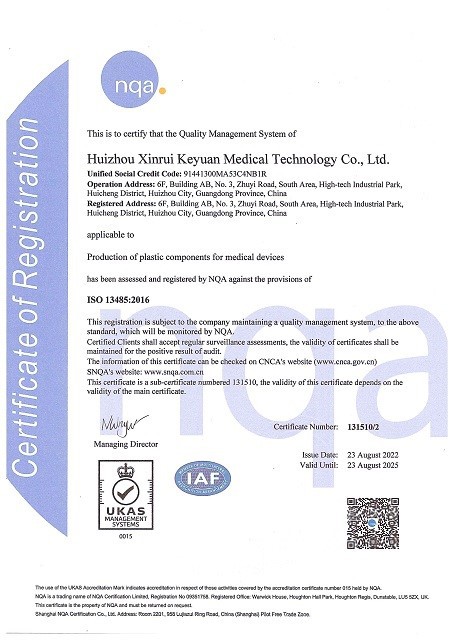
Xinrui Company was established in 2005, focusing on the R&D, designing, processing and production of components for medical equipment.Xinrui has a total construction area of nearly 50000 square meters and over 500 employees. After more than ten years of industry experience and technology accumulation, Xinrui Company has developed into a one-stop medical parts and finished products full ecological chain service manufacturer integrating industrial design, mold design, mold manufacturing, injection molding, surface treatment, sheet metal processing, CNC processing, solid silica gel/liquid silica gel, finished product assembly, etc.
Certificate

FAQ
We're professional silicone mould manufacturers and suppliers in China, specialized in providing high quality customized service. We warmly welcome you to wholesale bulk high-grade silicone mould for sale here from our factory. For price consultation, contact us.
Medical Silicone Nose Mask, Medical Silicone Moulded Parts, Silicone Mould Parts