


CNC Parts
Why Choose Us
Rich Experience
After more than ten years of industry experience and technology accumulation, Xinrui Company has developed into a one-stop medical parts and finished products full ecological chain service manufacturer integrating industrial design, mold design, solid silica gel/liquid silica gel, finished product assembly, etc.
Quality and Price
Our products are of high quality and competitive price.
Production Capacity
Advanced production equipment and rich operating experience.
Customized Service
We provide customized products that can meet the strict requirements of customers.
What is CNC Parts
CNC machined parts are a versatile manufacturing process that can be used on almost any material. They require less labor and are more durable than other manufacturing techniques, which makes them the ideal manufacturing process for producing large quantities of items on an assembly line.
Benefits of CNC Parts
Precision
A machine's precision refers to how fine a tolerance it can produce. Not all CNC parts are capable of high precision. Discuss the precision capabilities of any CNC machine shop you work with. Typically, aerospace and defense industries frequently rely on high-precision, machined parts. Creating these parts to their specifications could save lives due to their potential installation in aircraft, automobiles or defense equipment.
Accuracy
How closely the produced part matches the plans reflects the project's accuracy. With human machinists, mistakes can create minor differences in precision that could cause significant problems. Applications that require parts to meet strict design guidelines may fail with even small deviations from the correct design. Automating production with CNC machining reduces accuracy problems, but the operator still has some control over the process.Machining projects' accuracy depends heavily on the operator. Because the operator plays such a pivotal role, finding a machine shop that puts extra effort into projects is critical to getting the results you want.
More Capability
When paired with continuously advancing computer and design software, CNC parts can create products that even the most experienced engineers couldn't replicate. Advanced software allows CNC parts to produce a wider range of shapes, sizes and textures than manual or conventional parts. With this machinery, you have more options for designing and making your necessary parts.For example, CNC parts can consistently produce and replicate intricate and precise parts for applications with particular needs.
Simulated Models or Prototypes
The old method of making prototypes was to have a machinist create the design by hand. At the time, a manufactured prototype was the only way to examine the part in three dimensions. This time-consuming process did not guarantee accuracy in continued production.Today, you can have a CNC machine create a single prototype if you require one. However, if you only want to view the part in three dimensions, you can do that in the computer program used to send directions to the CNC machine.
CNC Processing Parts
5 Axis CNC machining The best CNC milling machines available today, 5 axis milling is a fast working, precise, micro machining powerhouse. A 5 axis CNC machine is capable of impeccable product and parts creation. This extremely fast milling machine,unlike the 3 axis and 4 axis.
CNC Parts for Camera Equipments
CNC parts for camera equipments is a kind of parts specially used in various camera equipments, which can provide a solid foundation for the accurate shooting of cameras. These parts select high-quality aluminum base material as raw material, and obtain excellent dimensional accuracy and surface finish after precision machining. During the production process, we strictly control the processes according to the highest standards so the tolerances of these parts are very small.
CNC Parts for Medical Equipment
The stable operation of medical equipment plays a crucial role in the operation and treatment of patients. Even for many critically ill patients, the device is like their second heart. CNC parts for medical equipment are parts specially used for medical equipment, they have various advantages to show excellent performance for stable operation of equipment. This product uses high-quality AL6061 as raw material, and has obtained high precision and stability after being processed by CNC milling machine.
Application of CNC Parts
Automotive Industry
CNC parts gets extensively used to produce automotive components. These parts get used for various purposes, such as engine parts, suspension components, and steering systems. The precision and consistency of CNC parts make them ideal for use in the automotive industry. CNC machines can produce parts with high accuracy and consistency, ensuring that every part meets the required specifications.
Aerospace Industry
The aerospace industry heavily relies on CNC parts to produce aircraft components. These parts include structural components, landing gear, and engine parts. CNC machines can produce complex shapes and designs, making them suitable for aerospace components. The precision and consistency of CNC parts ensure that every part meets the aerospace industry’s stringent requirements.
Medical Industry
CNC parts gets widely used in medical equipment and device production. These parts manufacture orthopedic implants, surgical instruments, and dental implants. The precision and consistency of CNC parts make them ideal for use in the medical industry, where accuracy and reliability are of utmost importance.
Manufacturing Industry
CNC parts get used in various manufacturing processes, including the assembly and production of electronics, machinery, and consumer products. CNC machines are versatile and can be programmed to produce a wide range of complex shapes and designs, making them suitable for producing parts for various industries. The precision and consistency of CNC parts ensure that every part produced meets the required specifications.
Defense Industry
The defense industry heavily relies on CNC parts to produce weapons and military equipment. These parts include tanks and artillery systems.
Common CNC Parts Materials
Aluminum
This material is widely used for CNC milling operations. It is lightweight, corrosion resistant, non-magnetic, easy to machine, and affordable, all of which make it an ideal option for many parts and products. It comes in many grades (e.g., 6061 and 7075), each of which offers slightly different characteristics that make it suitable for specific purposes. Examples of typical CNC machined aluminum components include aircraft parts, automotive parts, bike frames, and food containers.
Brass
This material is commonly utilized for precision machining operations. It is easy to work and cost-effective, which make it perfect for manufacturing a variety of precision components. It is available in numerous variations (e.g., C360 and C260), each with different compositions offering slightly different material properties. Other key advantages include attractive appearance, non-sparking, non-magnetic, and anti-bacterial/anti-microbial. Examples of typical CNC machined brass components include decorative hardware, musical instruments, plumbing fittings, and tools.
Carbon steel
This material is one of the most popular CNC machining material options. It comes in many grades (e.g., 1018, 1045, 1214, and 1215) that offer unique properties for use in different applications. Typical characteristics include high strength and toughness and good machinability, weldability, and heat treatability. Examples of typical CNC machined carbon steel components include fasteners, gears, rods, and other mechanical components.
Copper alloys
This material is highly versatile. Its many advantageous characteristics, such as conductivity, machinability, and ductility, make it a good material choice for various applications. It can offer slightly different properties depending on the elements with which it is alloyed. Examples of typical CNC machined copper components include computer chips, pipes/tubes, tanks, and valves.
Hastelloy
This material is highly resistant to corrosion, which makes it excellent for use in chemical processing applications. It also offers superior resistance to atmospheric oxidation, pitting, and stress-corrosion cracking. These qualities make it an ideal material for chemical manufacturing, paper production, and pharmaceutical equipment. Examples of typical CNC machined Hastelloy components include bars, coils, pipes, plates, and tubes.
Stainless steel
This material is another popular option for CNC machining operations. It is well-known for its corrosion resistance. However, it also has an excellent strength-to-weight ratio, extreme temperature resistance, and an attractive appearance. Different grades of stainless steel (e.g., 303, 304, and 316) offer slightly different characteristics depending on their exact composition. Examples of typical CNC machined stainless steel components include automobile parts, consumer appliances, electronic hardware, and medical instruments.
How to Choose CNC Parts
Purpose of the part
How will the part be used? Over the years, engineers have discovered what materials are good for what purpose. For example, aerospace components need materials that are strong and lightweight (e.g., aluminum, titanium, and high-strength steel alloys). Identifying the application(s) for which a CNC machined part will be used helps narrow down what materials are appropriate based on this gathered knowledge. If the component has multiple uses, it is important to consider all of them when choosing a material.
Environment
What environmental conditions will the part be exposed to during use? The conditions to which a CNC machined part will be exposed can affect its short-term and long-term performance. For example, if it needs to perform in an environment with high temperatures, high humidity levels, or corrosive chemicals, it may be damaged if it is not built to withstand these conditions.
Operational stress/strain
What operating conditions will the part be exposed to during use? A CNC machined part may experience high stress and strain during operations. In these cases, it is essential to choose a material that can stand up to these demanding operating conditions.
Operating temperature
What operating temperatures will the part be exposed to during use? A CNC machined part may be subject to high, low, or fluctuating temperatures during operations. It is vital the material you select has an operating temperature range broad enough to accommodate these conditions. Otherwise, the component may become brittle (if exposed to too low temperatures) or soft/warped (if exposed to too high temperatures).
Process of CNC Parts
Designing the Part
The process begins with the creation of a detailed design. Engineers use CAD software to develop a 3D model of the part. This model includes all dimensions, geometries, and features of the part. The precision of this design is paramount as it serves as the blueprint for the entire manufacturing process.In this phase, it’s essential to consider the material properties and the intended use of the part. The design must account for factors such as mechanical stress, thermal conditions, and tolerances. Once the design is complete, it is reviewed and approved before moving to the next stage.
Creating the CNC Program
The approved CAD model is then converted into a CNC program using CAM software. This program consists of a series of codes, typically in G-code, that instruct the CNC machine on how to move and operate. The CAM software generates these codes based on the design specifications and the capabilities of the CNC machine.During this stage, the tool paths are planned meticulously to optimize the machining process. Factors such as cutting speed, feed rate, and tool selection are considered to ensure efficiency and precision. The resulting CNC program is then tested and simulated to identify any potential issues before actual machining begins.
Preparing the CNC Machine
With the CNC program ready, the next step is to prepare the CNC machine. This involves setting up the machine with the appropriate tools and fixtures. The material from which the part will be made, often referred to as the workpiece, is secured in place.Tool selection is critical in this phase. Different tools are used for various operations such as cutting, drilling, and milling. The chosen tools must be compatible with both the material and the specific machining process to achieve the desired precision and surface finish.
Machining the Part
Once the machine is prepared and the workpiece is secured, the CNC program is loaded, and the machining process begins. The CNC machine follows the programmed instructions, moving the cutting tools along the predetermined paths to shape the workpiece.This stage can involve multiple operations, including roughing and finishing passes. Roughing removes the bulk of the material, while finishing ensures the part meets the exact specifications and achieves the required surface quality. Throughout the process, the machine’s movements are closely monitored to ensure accuracy and consistency.
Quality Control and Inspection
After machining, the part undergoes thorough quality control and inspection. This step ensures that the part meets all design specifications and tolerances. Various measuring tools and techniques, such as coordinate measuring machines (CMM) and optical inspections, are used to verify dimensions and surface finishes.Quality control is crucial in detecting any deviations or defects that may have occurred during machining. If any issues are identified, adjustments are made, and the part may be re-machined or refined to meet the necessary standards.
Finishing and Post-Processing
Depending on the application and material, the machined part may require additional finishing and post-processing. This can include operations such as deburring, polishing, anodizing, or heat treatment. These processes enhance the part’s appearance, durability, and performance.For example, anodizing can improve corrosion resistance for aluminum parts, while heat treatment can enhance the hardness and strength of steel components. The choice of post-processing methods depends on the specific requirements of the part and its intended application.
How to Maintain CNC Parts
Finding and fixing little problems
By performing routine maintenance, you can find and fix small problems before they grow into larger issues that could cause breakdowns or other problems. In the long term, this can save you money by preventing more expensive repairs or replacements.
Reduced repair costs
By taking care of problems as they arise through routine maintenance, you may be able to prevent more expensive repairs in the future. This can help you save money and lower the possibility that unplanned costs will negatively affect your bottom line.
Increasing the longevity of your equipment
By giving your CNC machine parts routine preventative maintenance, you can help to increase their lifespan and decrease the need for pricey repairs or replacements. This can help you save money over time and maximize the return on your machinery investment.
Increasing productivity and efficiency
CNC machine parts that have been well-maintained can function more effectively, consuming less energy and creating less waste. Your bottom line may benefit over time from increased operational efficiency and decreased energy expenses as a result of this.
Our Factory
Xinrui Company was established in 2005, focusing on the R&D, designing, processing and production of components for medical equipment.Xinrui has a total construction area of nearly 50000 square meters and over 500 employees. After more than ten years of industry experience and technology accumulation, Xinrui Company has developed into a one-stop medical parts and finished products full ecological chain service manufacturer integrating industrial design, mold design, mold manufacturing, injection molding, surface treatment, sheet metal processing, CNC processing, solid silica gel/liquid silica gel, finished product assembly, etc.
Certificate


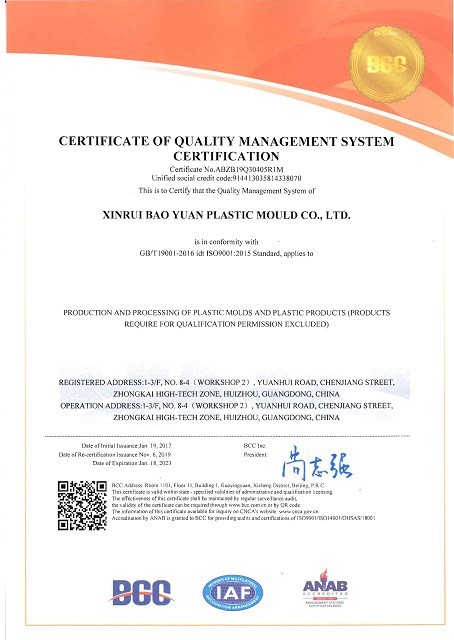
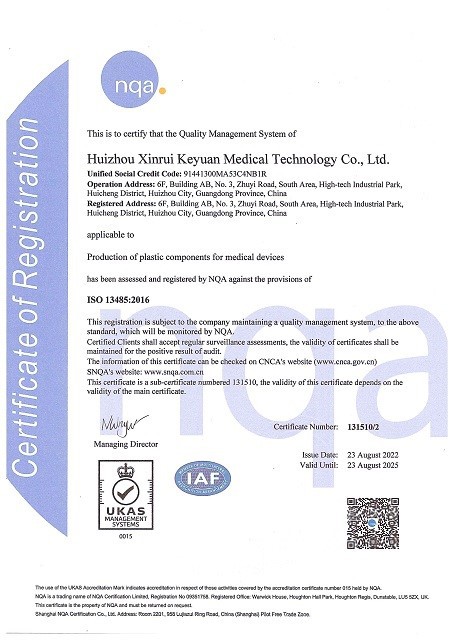
FAQ
We're professional cnc parts manufacturers and suppliers in China, specialized in providing high quality customized service. We warmly welcome you to wholesale bulk high-grade cnc parts for sale here from our factory. For price consultation, contact us.
motorcycle spare parts, micro precision machining, stamping mould