


CNC Machining
Why Choose Us
Rich Experience
After more than ten years of industry experience and technology accumulation, Xinrui Company has developed into a one-stop medical parts and finished products full ecological chain service manufacturer integrating industrial design, mold design, solid silica gel/liquid silica gel, finished product assembly, etc.
Quality and Price
Our products are of high quality and competitive price.
Production Capacity
Advanced production equipment and rich operating experience.
Customized Service
We provide customized products that can meet the strict requirements of customers.
What is CNC Machining
CNC (Computer Numerical Control) machining is a subtractive manufacturing technology: parts are created by removing material from a solid block (called the blank or the workpiece) using a variety of cutting tools.This is a fundamentally different way of manufacturing compared to additive (3D printing) or formative (Injection Molding) technologies. The material removal mechanisms have significant implications on the benefits, limitations and design restrictions of CNC. More on this below.
Benefits of CNC Machining
Productivity
Because you can programme a CNC mill or other machine to perform a complex series of actions, you can often step away while the machine gets to work. This can include out-of-hours automated machining in certain set-ups, hugely increasing your productivity and rate of output. This is particularly true for precision engineers operating several CNC centres such as Oracle Precision.
Consistency
Because the use of a CNC almost eliminates human error, CNC machines are highly consistent and accurate in the work they produce, providing clients with uniform and faultless products. This is what makes CNC machining so crucial for areas where quality is critical, as the level of reliability and quality in the work produced is much higher.
Cost-Effectiveness
CNC machines more than make up for their initial costs with a high rate of output and lower number of mistakes in resulting components. Operators also require less training to operate a CNC machine and can learn how to use the machine in a virtual environment, eliminating the need for training workpieces. As these machines become more popular and widespread, their cost will continue to drop.
Safety
Any hazardous safety issues, such as a jam or other machining error, are only detrimental to the machine and not a safety issue for the operator, unlike conventional open guard machining.
Versatility
CNC machines can be reprogrammed in a short period of time to produce a completely new product, making them ideal for short or long production runs. You can change programming without it being time-consuming or too costly.
The 4 Most Common Types of CNC Machining
CNC Lathes and Turning Machines
CNC lathes and turning machines are characterized by their ability to rotate (turn) materials during the machining operation. The cutting tools for these machines are fed in a linear motion along the rotating bar stock; removing material around the circumference until the desired diameter (and feature) is achieved.A subset of CNC lathes are CNC Swiss lathes (which are the type of machines Pioneer Service operates). With CNC Swiss lathes, the bar of material rotates and slides axially through a guide bushing (a holding mechanism) into the machine. This provides much better support for the material as the tooling machines the part features (resulting in better/tighter tolerances).
CNC Milling Machines
CNC milling machines are characterized by their ability to rotate cutting tools while holding the material workpiece/block stationary. They can produce a wide range of shapes including face-milled features (shallow, flat surfaces and cavities in the workpiece) and peripheral milled features (deep cavities such as slots and threads).Components produced on CNC milling machines are typically square or rectangular shapes with a variety of features.
CNC Laser Machines
CNC laser machines have a pointed router with a highly focused laser beam that is used to precisely cut, slice or engrave materials. The laser heats the material and causes it to melt or vaporize, creating a cut in the material. Typically, the material is in a sheet format and the laser beam moves back and forth over the material to create a precise cut.This process can produce a wider range of designs than conventional cutting machines (lathes, turning centers, mills), and often produce cuts and/or edges that do not require additional finishing processes.
CNC Electrical Discharge Machines (EDM)
A CNC electric discharge machine (EDM) uses highly controlled electrical sparks to manipulate materials into a desired shape. It can also be called spark eroding, die sinking, spark machining or wire burning.A component is placed under the electrode wire, and the machine is programmed to emit an electrical discharge from the wire which produces intense heat (up to 21,000 degrees Fahrenheit). The material is melted or flushed away with liquid to create the desired shape or feature.EDM is most often used for creating precise micro holes, slots, tapered or angled features and a variety of other more-complicated features in a component or workpiece. It is typically used for very hard metals that would be difficult to machine to the desire shape or feature. A great example of this is the typical gear.
Application of CNC Machining
Aerospace Industry
The aerospace industry and CNC machining have developed hand in hand. In fact, the aerospace industry's requirements have played a key role in developing CNC machining processes. The aerospace industry constantly develops sturdy materials for constructing equipment and other gadgets.Most of this equipment focuses on factors like safety and quality control. Therefore, precision machining is a definite requirement. CNC machining fills out the checklist very well.
Automotive Industry
The automotive industry is one of the main sectors for CNC machining. CNC machining offers advantages at every stage of the automotive manufacturing process, from prototyping in Research and Development (R&D) to producing large quantities of parts.In addition, CNC milling machines and lathes make a lot of different components, from large engine block parts to small gears and panels. These machines work on plastics as well as metals in automotive industries.
Marine Industry
The marine industry relies on high-quality craftsmanship since it creates water transportation that might travel all over the globe. The large-scale manufacturing process for boats and other water transportation requires automation to fulfill the manufacturing deadlines and quality control. This is only possible with CNC machining.CNC mills, lathes, electrical discharge machining, and other processes create almost all the boat parts for construction. These range from the hull, considered a boat's skeleton, to interior trimmings.
Electronics Industry
As in the case of the automotive industry, the electronics industry uses CNC machining in prototyping and the production stage. An advantage CNC machining offers in electronics is the ability to handle small-scale construction with consistency.A prime example of CNC machining in electronics is the metal alloy casing of Apple products like the Macbook and the iPhone. These are made using a CNC milling machine and CNC routers. CNC applies not only to the external case but also to the internal components of consumer electronics products.
Components of a CNC machining system
Input devices
With a CNC system being controlled and managed through a specialty system, it is necessary to have an effective way of coordinating the pre-programmed data with the designed system. These input devices include flash disks, compact discs, and other modern data transfer components.
The Machining Component
This is a high accuracy system that allows for the machining of the end products. It also encapsulates the cutting spindles and the systems controlling the machining parts. As a critical component of the CNC machine parts in Toronto, the processing component responds to the pre-programmed (coded) computer aided control logic.
Machine Control Unit
At the heart of the CNC system is a high value logic control panel consisting of the data processing unit (DPU) and a control loop unit (CLU). The DPU component allows for effective reception and decoding of the programs. Once decoded into machine language, the interpolator resting on the DPU calculates the exact positions of the cutting spindles. Once interpreted, the decoded data is relayed to the CLU as electrical signals. The machining parts of the device then initiates a motion in respect of the relayed signals.
Driving system
Another critical component of a CNC machine is the driving system that responds to the pre-programmed instructions by allowing for the cutting of the end products into shape and design. In its most simple form, the driving system consists of several control motors whose rotation determines the movement of the cutting spindle.
Feedback device
For a CNC system to operate effectively, there is need to relay feedback about the various processes during and after every process is completed. The feedback devices include linear transducers and direct position scales and encoders.
How to Choose CNC Machining
How do their Pricing align with your Budget?
The cost of CNC machining services can vary widely. Ensure that their pricing structure aligns with your budget without compromising on the quality of service.Be sure to factor in hidden costs, such as shipping and any additional fees. Remember, the cheapest option is not always the best. Quality should never be compromised for cost.
What is the Size of the Business?
The size of the CNC machining business can indicate its capacity to handle your project. Larger businesses might have more resources, but smaller ones might offer more personalized service. Understand the implications of their business size on your project before making a decision.Can they meet your Company's specific Needs?
Each company has unique machining needs, from design complexities to quantity requirements. The right CNC machining service should be able to meet these specific needs, offering customized solutions instead of one-size-fits-all services.
What are their Technical Capabilities?
The technical capabilities of a CNC machining service extend beyond just operating machines. It includes their ability to understand complex designs, use CAD/CAM software, and their proficiency in various machining processes.
What After-Sale Services do they offer?
After-sales service is often overlooked, but it's an important factor to consider. It could include everything from addressing post-delivery issues to offering assistance in assembly or installation.
4 Main Steps For CNC Machining Process
Step 1: Prepare a CAD Model
This involves creating a 2D or 3D model design of the product. There is much software suitable for the process, with popular ones being AutoCAD and SolidWorks. Furthermore, it is possible to convert 2D designs to 3D designs depending on the product requirement.Although some product designs might be simple, preparing some CAD models might require advanced knowledge, especially complex product designs.The CAD model should be properly designed and effortlessly show the operator critical features such as tolerance, construction lines, threads, and other parameters for an effective machining operation.
Step 2: Conversion to CNC Compatible Format
CNC machines won't understand the CAD model. Therefore, you have to transform the CAD model to a CNC-compatible format so that the machine can interpret it. For this step, you can use CAM software such as AutoCAD, Fusion 360, or other online software services.This software can convert to a CNC-compatible format and will instruct the CNC machine on parameters. Such as rotational and linear movement, cutting sequence, toolpath, workpiece, machine speed, etc., associated with the machining operation.
Step 3: Setup Execution
This involves choosing the right type of CNC machine and configuring certain operations before the machining operation begins. Selecting the right machine depends on the workpiece, the complexity of product design, and the cost. Afterward, the workpiece is mounted on the machine.
Step 4: Machine the Part
The operator will attach the necessary cutting tools and kickstart the process. The process is automated and will run until deemed complete by the computer program. During and after the machining process, machinists will do several levels of inspection to occur for quality assurance.
Precautions for CNC machining
Design and programming
The foundation of CNC machining begins with designing the part you want to create and then translating that design into the necessary G-code instructions. Design software and CAM programs are crucial in generating accurate and efficient CNC instructions.
Material selection
Different materials behave differently during CNC machining operations. Factors like hardness, brittleness, and heat resistance influence tool choices, cutting speeds, and feeds. Proper material selection ensures successful machining without excessive wear on tools.
Tool selection and maintenance
Selecting the right cutting tools, end mills, drills, and more is crucial to achieving the desired results. Regular tool maintenance and replacement prevent deterioration in quality and accuracy.
Workholding
Securing the workpiece properly on the CNC machining table or chuck is vital. Inaccurate workholding can lead to misaligned cuts and wasted material. Effective clamping methods are used to ensure stability during machining.
Speeds and feeds
Determining the appropriate cutting speeds and feed rates is essential for efficient machining and tool life. Balancing these factors avoids excessive wear on tools and prevents the material from getting damaged.
Precision and tolerances
CNC machining are known for their high precision, but it is crucial to understand the tolerances needed for a specific part. Over-tolerancing can lead to unnecessary complexity and cost while under-tolerancing might compromise the part's functionality.
Our Factory
Xinrui Company was established in 2005, focusing on the R&D, designing, processing and production of components for medical equipment.Xinrui has a total construction area of nearly 50000 square meters and over 500 employees. After more than ten years of industry experience and technology accumulation, Xinrui Company has developed into a one-stop medical parts and finished products full ecological chain service manufacturer integrating industrial design, mold design, mold manufacturing, injection molding, surface treatment, sheet metal processing, CNC processing, solid silica gel/liquid silica gel, finished product assembly, etc.
Certificate


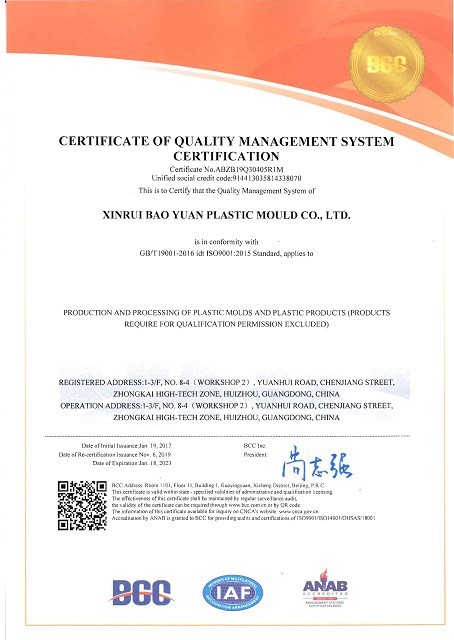
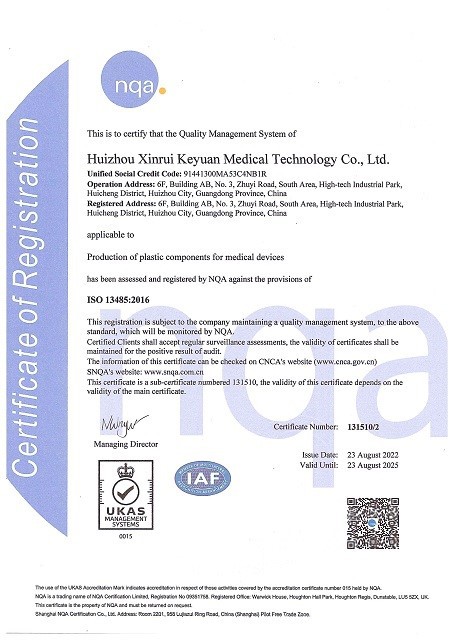
FAQ
We're professional cnc machining manufacturers and suppliers in China, specialized in providing high quality customized service. We warmly welcome you to wholesale bulk high-grade cnc machining for sale here from our factory. For price consultation, contact us.
CNC Machining, mechanical aluminum parts, Aluminum CNC Milling Machining Components